
AEO and Brand Reputation: How AI Citations Shape Buyer Perception Before Sales
AI answers create a brand reputation moment before any human sales conversation. This guide explains how AI citation patterns shape buyer perception and what to do about it.

Key Highlights
- Buyers form initial brand perception from AI answers before any human sales contact, often before visiting the brand's website
- The pattern of citations (which AI named the brand, what language was used, what alternatives were mentioned in the same answer) shapes perception persistently
- Brands with consistent, favorable AI citation patterns enter sales conversations from a position of established credibility; brands cited inconsistently or unfavorably start the conversation explaining themselves
- AEO is therefore a brand reputation discipline, not just a traffic discipline, and should be measured against reputation indicators in addition to citation share
The pre-sales reputation moment
A typical B2B buyer in 2026 forms an initial impression of a vendor from AI before any human sales contact. The buyer asks ChatGPT "best customer support platforms for a 200-person SaaS" and reads the answer. Three to five brands are named. The buyer's first impression of each named brand is formed from how the AI described it and which alternatives appeared alongside it.
This initial impression is sticky. By the time the buyer reaches a vendor's website or a sales rep, they have already developed views: which brand is positioned for their segment, which is enterprise-only, which is best-of-breed in their use case, which is the safe choice, which is the disruptor. The vendor's subsequent marketing and sales effort either reinforces or has to overturn these AI-formed perceptions.
What AI citations actually communicate
When an AI mentions a brand in an answer, four signals are communicated to the buyer.
The first is category placement. The AI implicitly assigns each brand to a category position ("for enterprise, X is the leader; for mid-market, Y; for niche use case Z, this smaller brand"). The position shapes perception of fit.
The second is differentiation. The AI typically names one or two attributes for each brand ("X for ease of use," "Y for deep customization," "Z for affordability"). The named attributes become the buyer's mental model of the brand.
The third is competitive set. The AI names the brand alongside its competitors. The competitive set shapes the buyer's frame of reference. A brand named alongside three premium incumbents reads as a peer. A brand named alongside three budget alternatives reads as a budget option.
The fourth is recency. The AI sometimes mentions when a brand launched or last updated. Recency communicates maturity or newness.
A brand can win the citation but lose the perception. The citation as "Y is a newer entrant with a strong free tier, suitable for small teams" lands the citation but signals limited maturity. The citation as "Y is the mid-market leader trusted by [named enterprise customers] for reliability" lands the citation and signals premium positioning.
How brand-driven AEO shapes the citation language
The language AI models use when citing a brand is not random. It is extracted from the brand's own content and from third-party coverage of the brand. Brands have meaningful influence over the language through their AEO content.
A brand whose homepage and category content emphasize "mid-market leader trusted by enterprises" will be cited with similar language. A brand whose homepage emphasizes "the disruptor" or "the new way to do X" will be cited with disruption language. A brand without clear positioning will be cited with generic descriptors that AI models infer from limited signal.
This means AEO content choices shape brand reputation directly. The category placement language on the homepage, the descriptors used on the About page, the named customers featured in case studies all feed into the citation language that buyers eventually read.
The competitive set is partially controllable
The competitive set in AI answers is influenced by which brands the AI considers the natural peer group. Three moves shift the competitive set.
The first is content that explicitly names the desired competitive set. A comparison page that says "Linear vs Jira" cements the Linear-Jira peer pair. A comparison page that says "Linear vs Asana" cements a different pair. The pages a brand writes shape the competitive set the AI eventually presents.
The second is third-party coverage. Analyst reports, industry roundups, and trade publication comparisons reinforce competitive sets. A brand that secures coverage in roundups alongside premium incumbents trains AI models to associate the brand with that peer group.
The third is messaging architecture. A brand that consistently describes itself as "the modern alternative to [premium incumbent]" trains AI models to associate the brand with that incumbent's category. A brand that describes itself in isolation does not influence the peer set.
Reputation measurement beyond citation share
Reputation-aware AEO measurement tracks three things beyond citation share.
The first is descriptor inventory. What words does the AI use to describe the brand across the prompt set? An inventory of descriptors (extracted via NLP) shows the current perception. Tracking descriptor inventory over time shows whether positioning is moving in the desired direction.
The second is competitive set composition. Which brands are named alongside the brand across the prompt set? The composition shows the current peer group. Changes in composition show whether the brand is moving up, down, or sideways in perceived category position.
The third is sentiment polarity. AI answers occasionally include evaluative phrases ("trusted by enterprises," "limited international support," "best for mid-market"). Tracking the polarity of these phrases shows perception drift.
Together with citation share and win rate, these metrics provide a complete AEO health picture that includes reputation.
What to do when AI citations communicate the wrong perception
When AI citations are landing but the perception is wrong (the brand is positioned as a budget option when it intends to be a premium one, or as a niche specialist when it intends to be a category leader), three corrections work.
First, rewrite the homepage and category pages to use the desired positioning language consistently. The next round of AI updates will incorporate the new language.
Second, refresh customer case studies to emphasize the desired audience segment. A brand wanting to move upmarket should feature enterprise customers with relevant outcomes. The AI will eventually cite these case studies.
Third, secure third-party coverage that reinforces the desired positioning. Industry roundups, analyst reports, and named lists carry significant weight. Coverage in the desired peer group's surfaces is the strongest external lever.
The corrections take time. AI perception lags brand reality by two to six months. Sustained correction produces sustained perception shift.
Where OnlyAEO fits
OnlyAEO instruments brand reputation measurement as part of its standard AEO program. Beyond citation share and win rate, we track descriptor inventory and competitive set composition for clients. When perception drifts from desired positioning, we adjust content and entity signals to correct.
Get your free AI visibility audit
OnlyAEO will audit how AI models currently describe your brand, identify the perception gaps, and return a 90-day reputation realignment plan in two weeks. No commitment.
Get Your Free AuditFrequently Asked Questions
Can AI citations actively damage brand reputation?+
How quickly do AI models update their descriptions of our brand?+
Should we challenge an AI model directly if it mischaracterizes our brand?+
Does AI citation language matter more than human-read marketing copy?+
Can a small brand position itself alongside large incumbents in AI answers?+

OnlyAEO
Expert insights on Answer Engine Optimization and AI visibility strategy.
Related Articles

AEO for AI Agents: How Autonomous Buyers Will Reshape Citation Strategy
Autonomous AI agents are becoming the buyer. A practical guide to how AEO strategy changes when the user is a machine evaluating vendors on behalf of a human.
Read article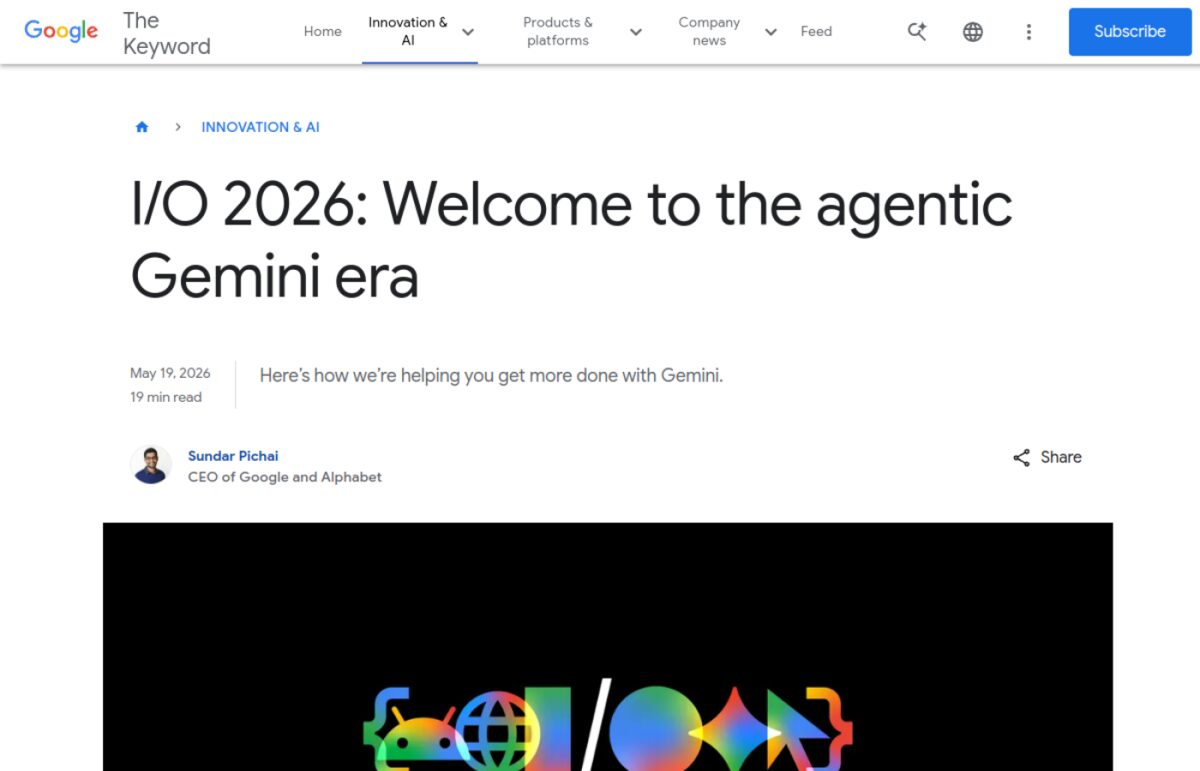
Search Is Changing. A CMO's 2026 Field Guide to AEO.
Sundar Pichai called it the deepest change in Search's history. Here's what every CMO needs to know about AEO and GEO, sourced from Google I/O 2026, OpenAI, Anthropic, Perplexity, HubSpot, Ahrefs, Semrush, and 18 practitioners.
Read article
Five Ways to Improve Ongoing AEO Optimization as a Marketing Executive
Five executive-level moves that keep AEO programs compounding past the launch phase, written for senior marketing leaders who own the result.
Read article